
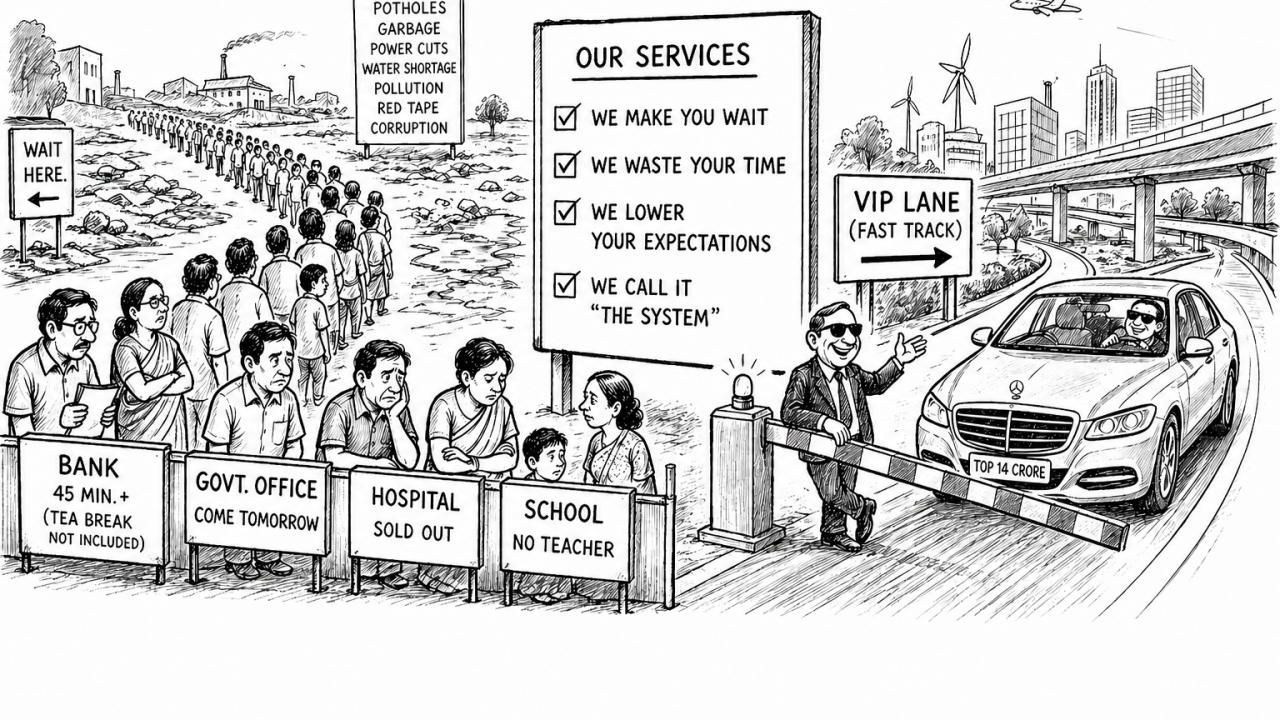
Why do so many families in India struggle despite working hard?
According to the Government of India’s Periodic Labour Force Survey (2022–23), a large share of Indian households earn less than ₹25,000 per month. For millions of families, this income must cover housing, food, transportation, healthcare, education, and unexpected expenses.
This is not simply a question of poverty. It is a question of opportunity.
India has made remarkable progress over the past several decades. The economy has grown, infrastructure has expanded, and millions have moved into the middle class. Yet for many citizens, access to opportunity remains limited. The difference between success and struggle is often determined not by talent or effort, but by the quality of systems that surround them.
One of the clearest examples is education.
Children from wealthier families often have access to better schools, private tutoring, stronger networks, and greater exposure to opportunities. Those advantages accumulate over time. Meanwhile, many children from lower-income households depend entirely on public education systems that frequently struggle with teacher shortages, inconsistent quality, inadequate infrastructure, and limited accountability.
As a result, two children with equal intelligence and ambition can face very different futures simply because of where they were born.
A strong public education system is not merely a social program. It is the foundation of economic mobility.
Countries that have successfully expanded prosperity at scale invested heavily in providing reliable, high-quality education to all citizens. Effective public schools create a larger skilled workforce, increase productivity, encourage innovation, and reduce inequality of opportunity.
The challenge is not spending alone. It is outcomes.
Parents care less about budgets and policies than they do about whether their children can read, write, solve problems, and compete successfully for jobs. Educational systems should therefore be measured by learning outcomes, graduation rates, employability, and long-term economic success.
India possesses extraordinary talent and ambition. What it needs are systems that allow talent to flourish regardless of family income.
If we are serious about improving outcomes for millions of citizens, public education is one of the most powerful places to begin.
A nation cannot create equal outcomes for everyone. But it can create a fairer opportunity to succeed.
And that opportunity begins in the classroom.
Source: Government of India, Periodic Labour Force Survey (PLFS) 2022–23.
Leave a Reply