
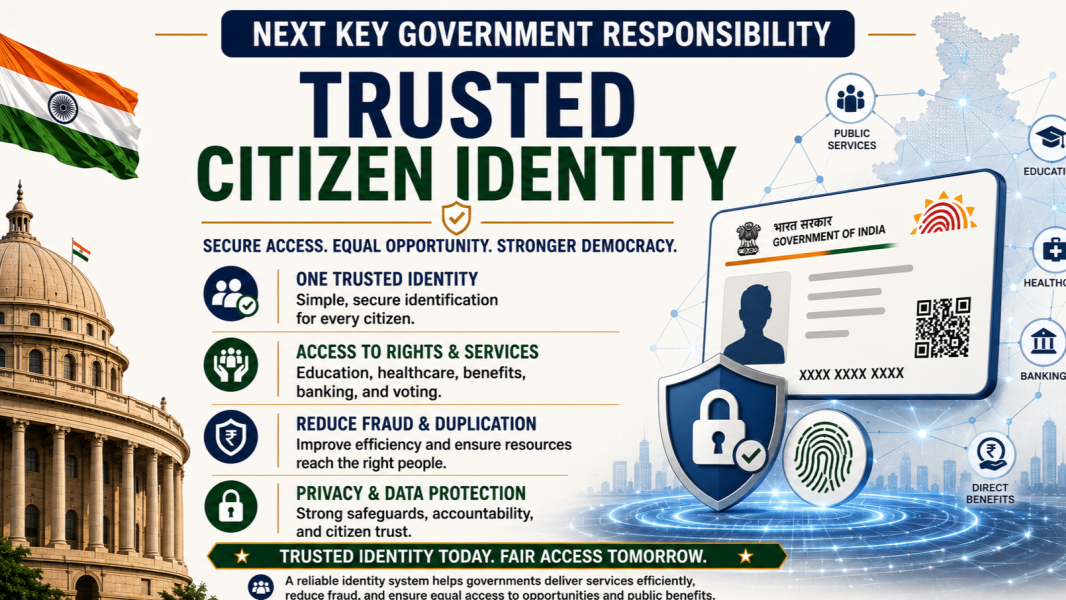
Every modern democracy depends on knowing who its citizens are. Without a trusted system of identification, governments struggle to deliver services fairly, enforce the law effectively, protect national security, and ensure that public resources reach the right people.
Citizen identity is therefore not simply an administrative function. It is one of the government’s most fundamental responsibilities.
Identification is the gateway to participation in modern society. It enables citizens to vote, open bank accounts, receive government benefits, access healthcare, attend school, obtain passports, pay taxes, and interact with public institutions. When identity systems are accurate and secure, these services become faster, simpler, and more accessible.
A trusted identity system also improves the efficiency of the government itself. Duplicate records, fraudulent claims, and administrative errors can consume enormous public resources. A unified and reliable identity framework reduces duplication, streamlines service delivery, and enables governments to allocate taxpayer money more effectively.
India has made remarkable progress in building a digital identity infrastructure. Millions of citizens now use digital identification to access financial services, government programs, and digital payments. This has significantly expanded financial inclusion and simplified access to many public services.
Yet the work is far from complete.
A modern identity system must continue to evolve alongside technology and public expectations. It should be secure against fraud, protect citizens’ privacy, minimize duplication, and remain accessible to every eligible citizen regardless of geography, income, age, or digital literacy.
Trust is equally important. Citizens must have confidence that their personal information is protected, used responsibly, and governed by clear legal safeguards. Strong identity systems require not only advanced technology but also transparent governance, independent oversight, and robust cybersecurity.
As governments increasingly deliver services digitally, trusted identity becomes even more important. Whether applying for benefits, filing taxes, accessing healthcare, registering property, or starting a business, citizens should be able to verify their identity quickly, securely, and conveniently.
Reliable identity also strengthens national security. It helps combat fraud, reduces identity theft, supports law enforcement, and improves the integrity of public records while making legitimate services easier to access.
Ultimately, trusted citizen identity is about opportunity.
When identity is secure and universally recognized, citizens spend less time navigating bureaucracy and more time participating in education, employment, entrepreneurship, and civic life. Government becomes more efficient, public services become more accessible, and trust between citizens and institutions grows.
Throughout this series, we have explored seven core responsibilities of government: education, law and order, environmental protection, fair taxation, national security, transparent governance, and trusted citizen identity. Together, these responsibilities form the institutional foundation of a functioning democracy.
Economic growth alone cannot build a great nation. Strong institutions do.
And every strong institution begins by knowing—and serving—its citizens well.
Leave a Reply