
Category: Law & Order
-

India’s Road Safety Crisis: Safer Roads Begin With Stronger Systems
India has built one of the world’s largest road networks, expanded highways at remarkable speed, and put mobility within reach of hundreds of millions of people. But this progress has come with an unacceptable human cost. In 2023, more than 172,000 people lost their lives on India’s roads—the highest number ever recorded. Behind that number…
-
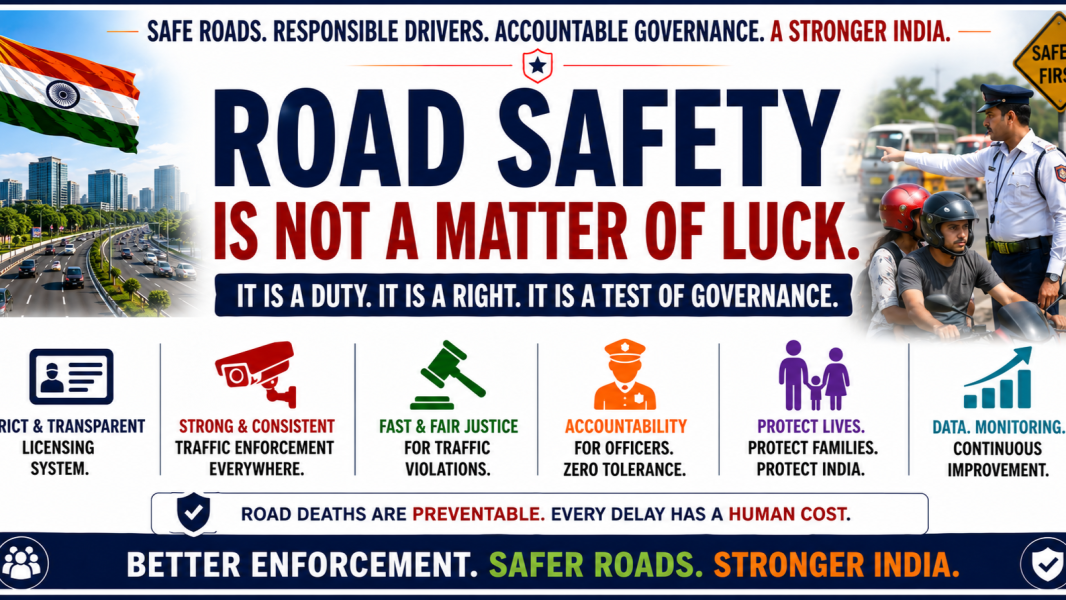
Road Safety Is Not a Matter of Luck
Every time we leave home, we make an assumption: that the roads we travel on are governed by rules. We assume the person driving toward us has been properly trained and licensed. We assume vehicles are roadworthy. We assume red lights mean stop, speed limits mean something, drunk driving has consequences, and dangerous behavior will…
-

Supporting Those Who Protect Us
A professional police force cannot be built on training and accountability alone. The people entrusted with protecting society must themselves have security, dignity, and support. Police officers perform one of the most demanding functions of the state. They respond to crime, maintain public order, manage emergencies, investigate offenses, protect vulnerable citizens, and are often expected…
-
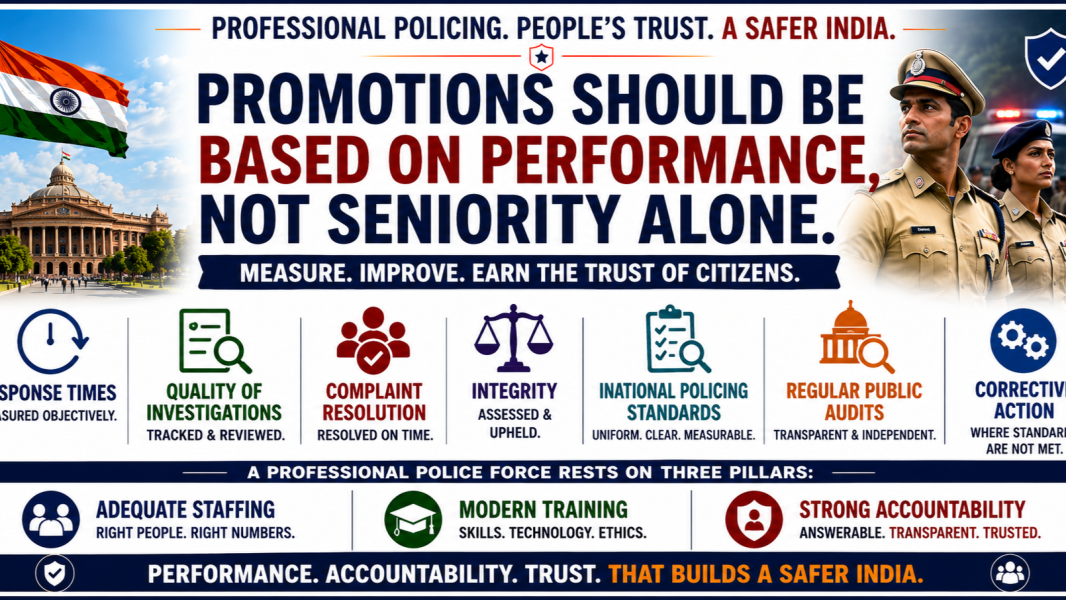
Professional Policing Starts with Merit
A professional police force cannot be built on recruitment and training alone. It must also have a system that recognizes good performance, rewards integrity, identifies weaknesses, and holds every level of the organization accountable for results. Police officers perform one of the most difficult functions of government. They respond to emergencies, investigate crimes, maintain public…
-
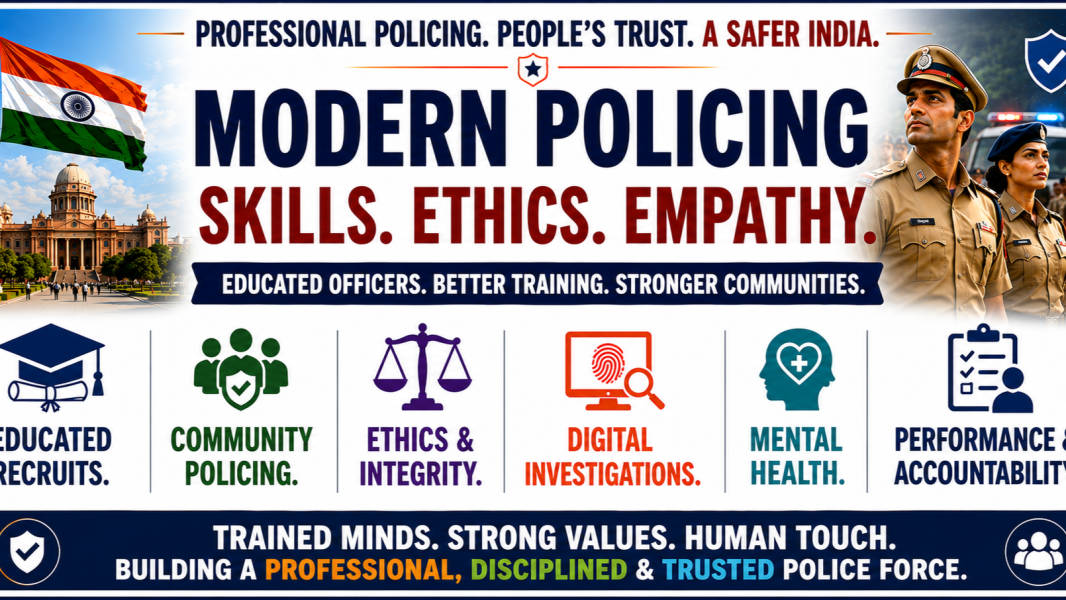
Modern Policing Demands Education, Ethics, and Professionalism
Modern policing requires far more than physical strength and the ability to enforce the law. A police officer today may be called upon to investigate cybercrime, respond to domestic violence, manage public protests, deal with a person experiencing a mental health crisis, preserve digital evidence, resolve community disputes, and make decisions involving citizens’ constitutional rights…
-
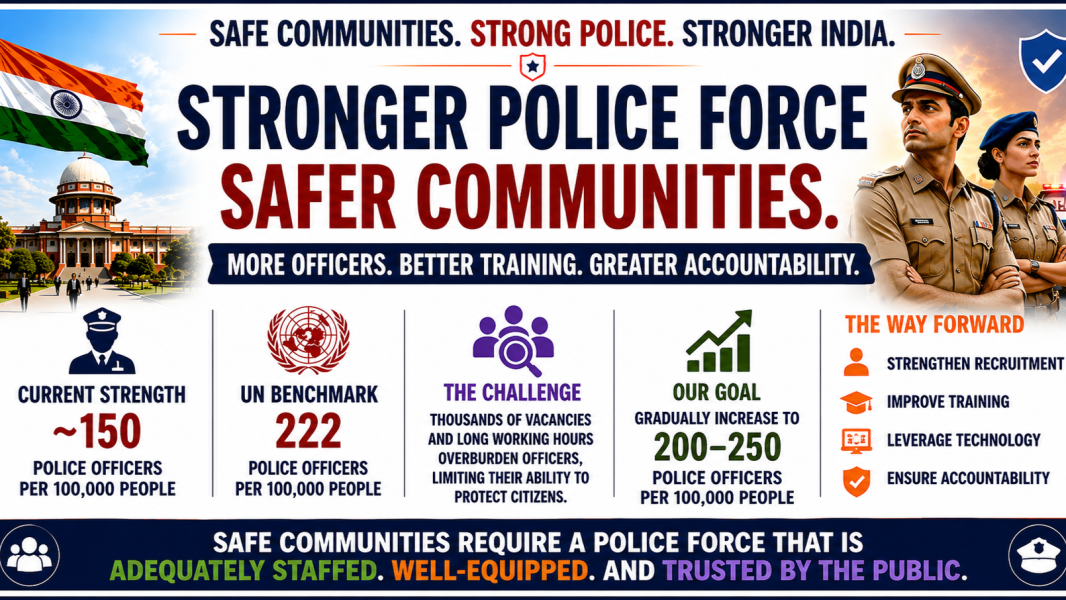
A Stronger Police Force for Safer Communities
For most citizens, the police are the most visible face of the justice system. When someone faces theft, violence, harassment, fraud, a road accident, or another emergency, the first call is rarely to a court or a government ministry. It is to the police. Yet we often expect police officers to provide faster responses, investigate…
-
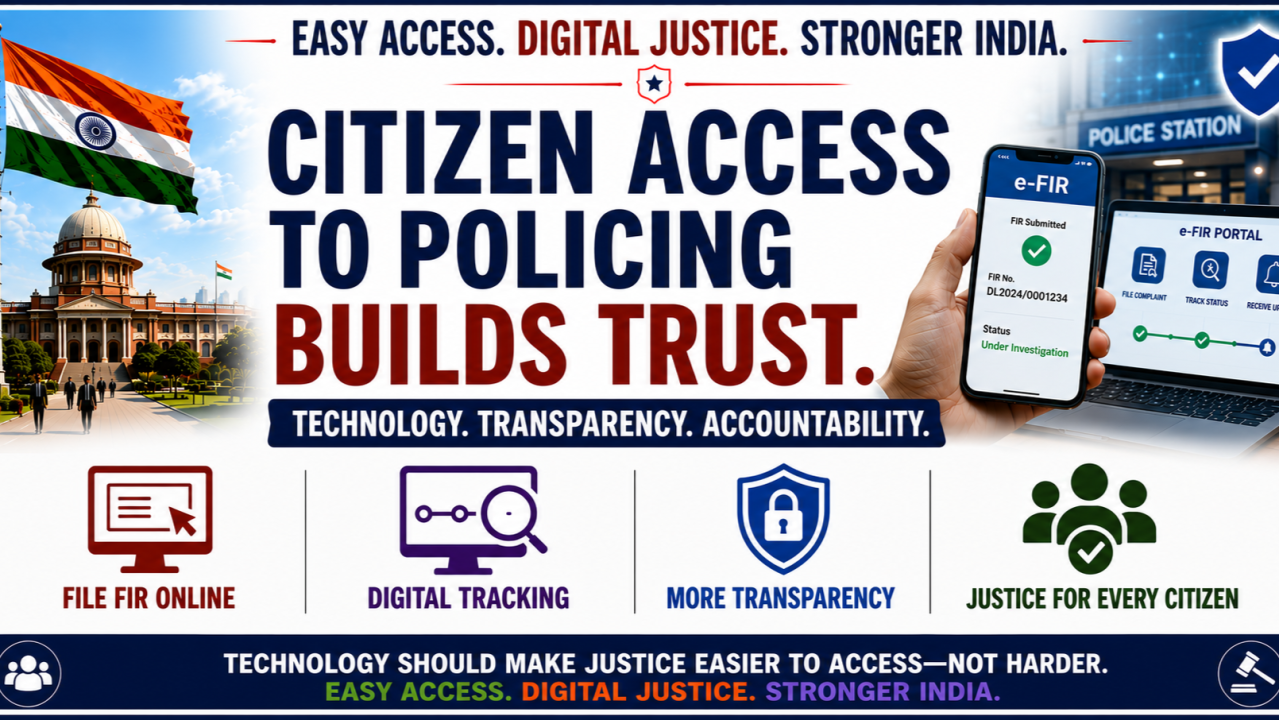
Digital Access to Justice: Making FIR Filing Simple and Transparent
For most citizens, the justice system does not begin in a courtroom. It begins at a police station. And often, it begins with something as basic as trying to file a complaint. India can modernize police forces, strengthen forensic capabilities, hire more personnel and reform criminal laws. But these reforms mean little to an ordinary…
-
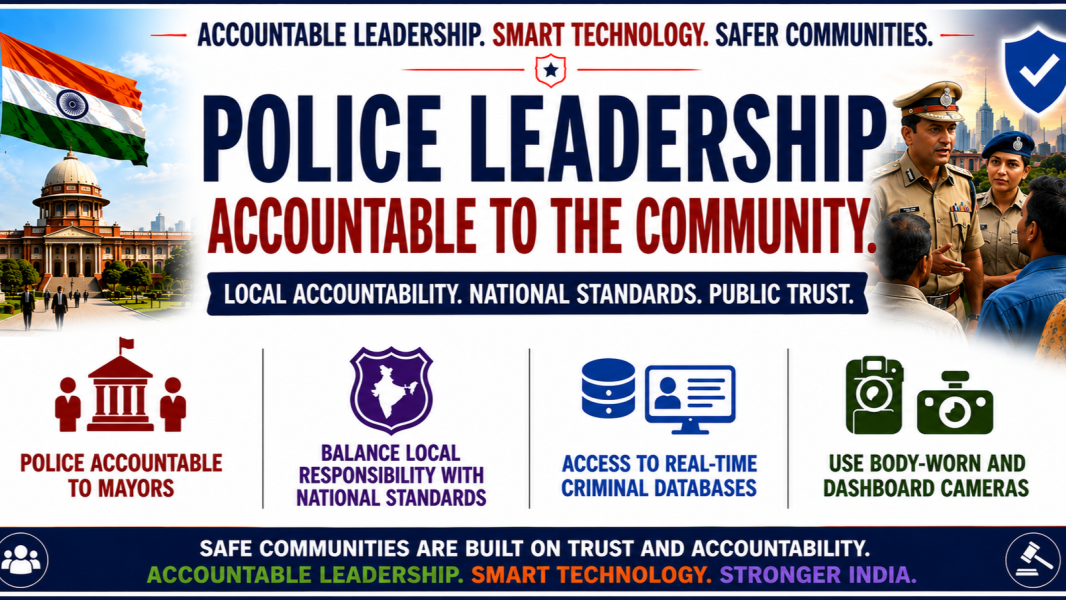
Local Accountability and Smart Technology Can Strengthen Policing
India cannot build safer communities simply by adding more police officers or buying more equipment. Lasting improvement requires something more fundamental: clear accountability, professional standards, modern technology, and policing that responds to the communities it serves. India’s police system must combine the strength of national and state institutions with the responsiveness of local government. The…
-

Crime Is Local. Accountability Should Be Local, Too.
When a family worries about walking home after dark, when a shopkeeper faces repeated theft, when women feel unsafe using public transport, or when residents see drugs or violence spreading through their neighborhood, they do not experience crime as a state-level statistic. They experience it locally. Yet policing in India remains largely administered through state-level…
-
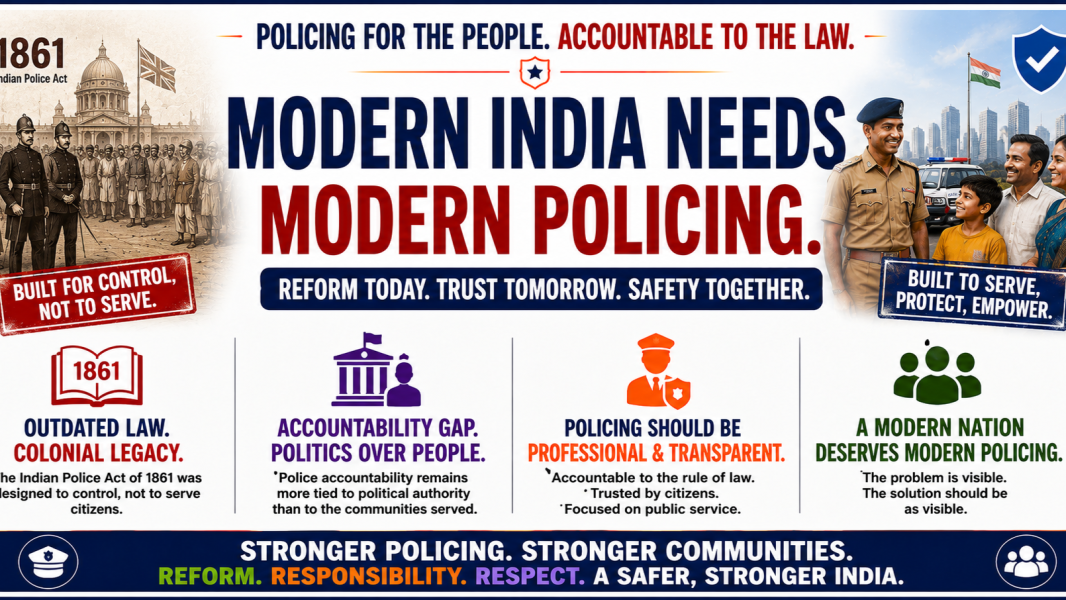
Modern Policing for a Modern India
India aspires to become a developed nation. Its cities are expanding, its economy is becoming increasingly sophisticated, and technology is transforming almost every aspect of daily life. Yet one of the institutions most fundamental to a functioning society—the police—still carries the legacy of a system created during colonial rule. The Indian Police Act of 1861…